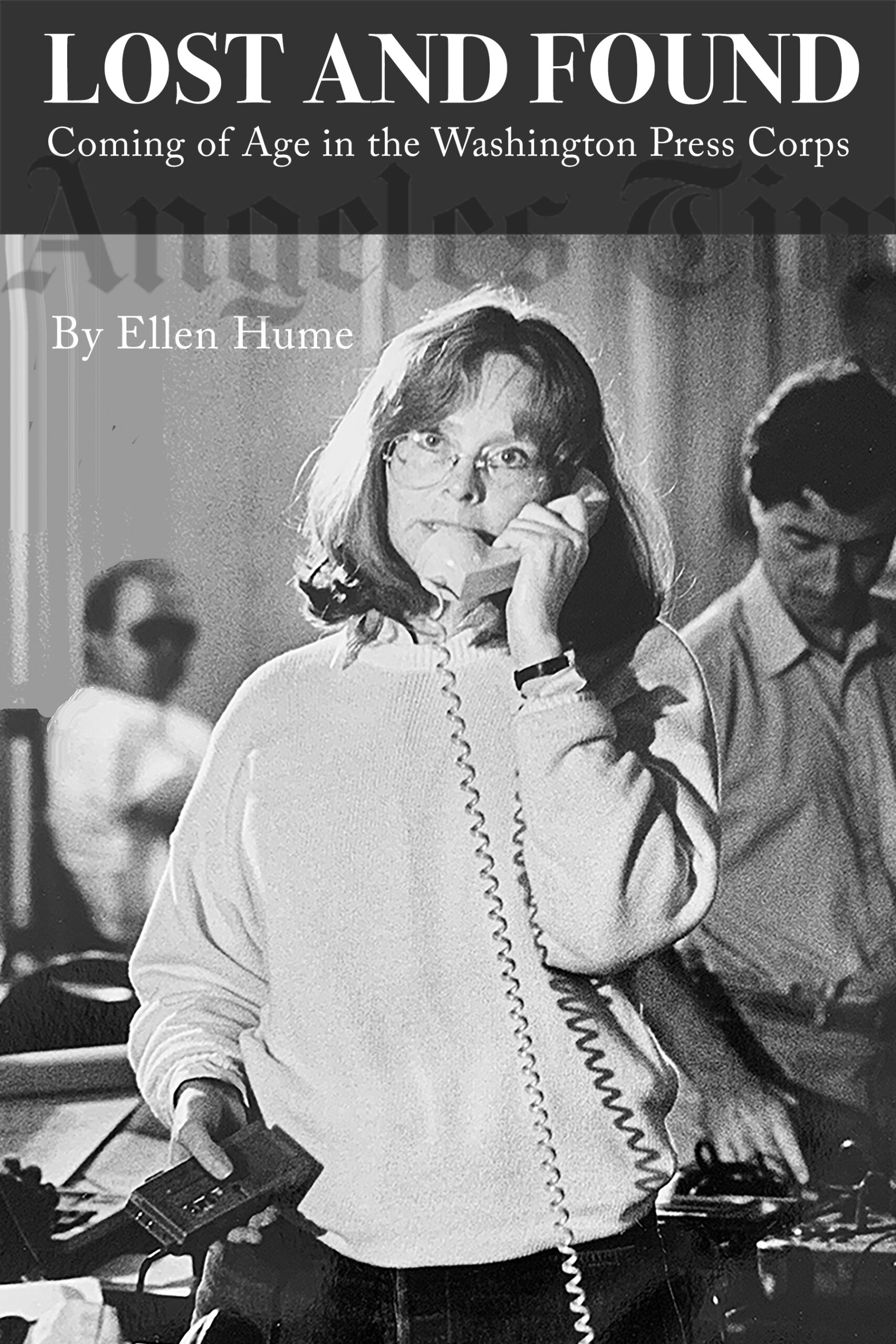
 My memoir, Lost and Found: Coming of Age in the Washington Press Corps, is finally finished! The publicity blurb describes it as follows: “This upbeat, funny and true story is about an American girl who found her superpowers by becoming Clark Kent. She covered some of the most remarkable stories of her time, including the search for kidnapped newspaper heiress Patty Hearst, terrorist Sara Jane Moore’s attempt to kill President Ford, civil rights leader Jesse Jackson’s historic presidential campaign, the Three Mile Island nuclear accident, and the Reagan White House. Even though she hated politics, Hume’s insistence on holding the powerful accountable took her to the top of the journalism heap in Washington. She turned away from joining the new pundit industry to try to reform the system, stirring up powerful opponents along the way. But this tell-all memoir is, remarkably, a love story as well as a look inside the American news media at the height of their power,”
You can order it from your independent bookstore, from Amazon.com, or from Bookbaby…
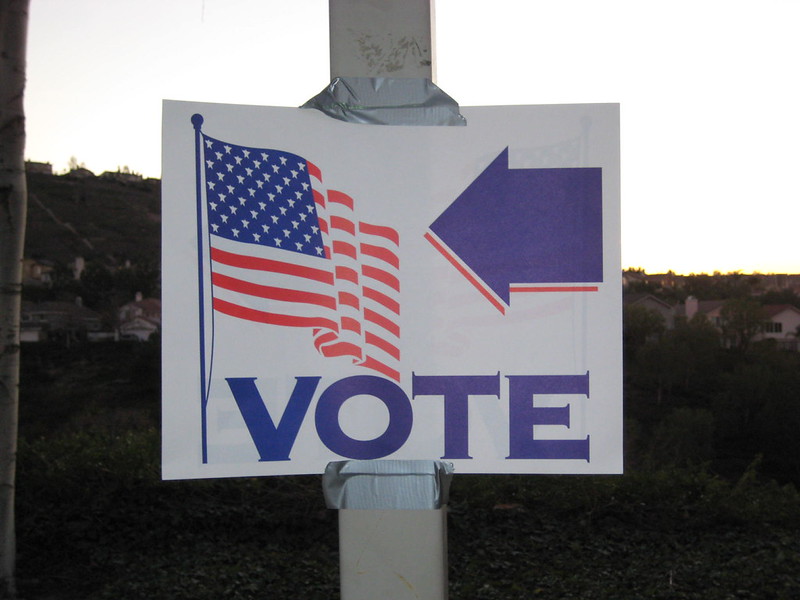
Please take action now to protect the Nov. 3 national midterm elections from sabotage by those who are trying to suppress the legitimate vote in order to hold onto power.
- Check now to be sure you and other eligible voters you know can vote.
- Check your voter registration. Some voter rolls have been purged. Text VOTER to 59798 to get the link to check your status If you’re not registered at all, get registered. And if you have any trouble or need more help, call 1-866-OUR-VOTE and they can get you the support you need.
- Figure out how early you can vote, and make a plan with friends to do so. Some voter locations have been changed. Find out if your state has new requirements such as bringing your birth certificate or passport to the polling place. To check all this out, including when your state opens early voting or mails out ballots, go to
866ourvote.org
- Train to be a poll worker or poll watcher. The way to find volunteer activities to support the voting in your community go to wearegroundcontrol.org
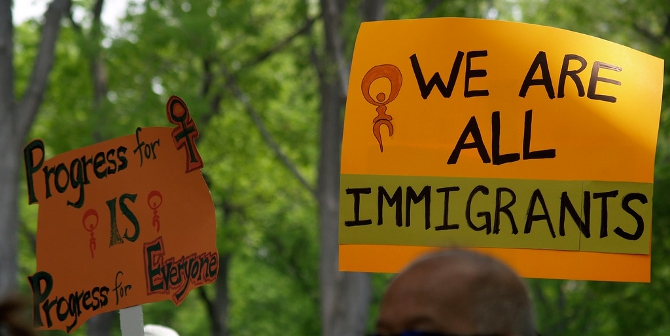
Just try living in the USA without immigrants for one day…
I’m working on a new journalism project, “Who is An American? Stories from our Neighborhoods,” to share stories of my immigrant neighbors, new Americans who started life in another country. They are the construction workers trying to repair the bricks in my apartment building, the Spanish-speaking cooks in the Italian restaurant kitchens next door, the doctors, nurses and technicians at Mass General and Brigham and Women’s hospitals, the electrical engineers, plumbers, dry cleaners, physical therapists, AI coders, the garbage truck guys and street sweepers who try to keep our neighborhood clean even when we don’t. Some of them have documents, and some of them don’t. These immigrants all across the USA pay more in taxes, as a group, than they collect in benefits. Check it out with multiple verified data sources. it’s true.
Where did your ancestors come from, to make you an American today? Weren’t they just a few generations earlier than today’s immigrants? i am one of the lucky ones. My own ancestors came over at the time of the American Revolution from Scotland, lured by promises of cheap farmland, and from Switzerland, escaping religious persecution. Others came 100 years later, from Sweden and Norway when their farms went bankrupt and their national economies had collapsed. Most of them found a good life here, helping to build not just their own lives, but the USA we know today.
A Boston neighbor from the Dominican Republic, who cleans houses like my Swedish grandmother, self-deported last month after 25 years here. She raised two children with her husband in the USA. But she didn’t have the right documents for herself. So she is gone. I wonder what has happened to the Haitian nurse in Lexington who looked after my mother in her old age?She probably had Temporary Protected Status, which has just been cancelled abruptly by Trump. She can’t go home, it’s too violent there. Where will she go? It isn’t safe here either, any more.
In her poem HOME, Warsan Shire, explains:
“no one leaves home unless
home is the mouth of a shark
you only run for the border
when you see the whole city running as well..”
If you, like me, want to change the poisonous narrative right now about immigrants in America, check out the resources of the National Immigration Law Center local immigrant support groups, or your local Indivisible group. Then ask the White supremacists in power now to try living one day in America without any immigrants!
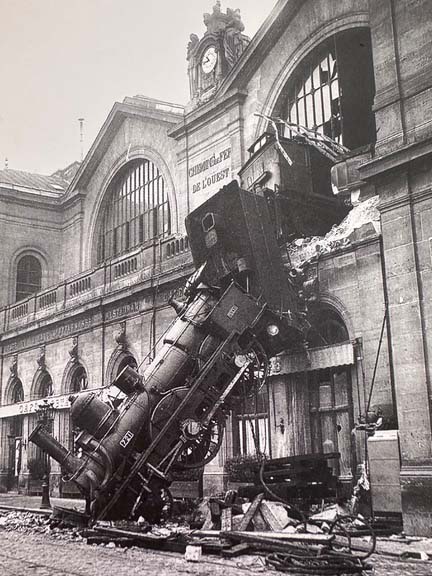
The Trump train wreck is having an impact on everyone, everywhere, all at once. I commend to you this essay which is great advice about how to meet this moment in the United States and the world. Please keep heart, stay with it, don’t give up, and get into “good trouble” if you can. Check out Indivisible.org which is a big community, with actions you can take. Join a local group. Write postcards, send donations and call voters. Vote in your local elections. Stand up with the vulnerable. It’s going to get worse before it gets better, so prepare yourself for the long haul.
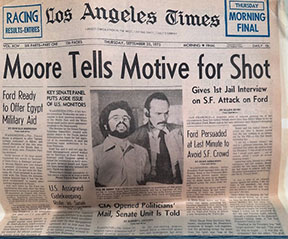
Donald Trump’s triumphant return to the Pennsylvania site of his first assassination attempt amplifies the threat of violence that is hanging over this US presidential election. Prosecutor Jack Smith has renewed his efforts to hold Trump criminally accountable for the deadly Jan. 6, 2021 insurrection at the Capitol, and two recent near-misses on the former president, along with his own rhetoric, have stoked real concern about more violence ahead.
These events have thrown a new spotlight on another would-be presidential assassin– Sara Jane Moore, the suburban housewife who nearly shot President Gerald Ford in San Francisco 49 years ago. My unwitting direct involvement in Sara Jane Moore’s assassination attempt on Sept. 22, 1975 still haunts me today.
When she aimed her .38 at President Ford from 40 feet away, Sara Jane Moore was someone I mistakenly thought that I knew fairly well. She had tried to call me earlier that morning, and I spoke with her in jail the night afterwards. What she confessed then was traumatic for me, and too awkward for either my newspaper or Sara Jane Moore to admit afterwards.
The full story, which I recount in detail in my memoir, illustrates the remarkable power back then of the mainstream news media, including the Los Angeles Times, before competition from digital media and cell phones changed everything. It also conjures up an extraordinary time in California, which was buzzing with cults and political extremists. The1969 Manson family murders were followed by the 1974 kidnapping of heiress Patty Hearst by a self-styled army of domestic revolutionaries. Manson acolyte Squeaky Fromme’s attempt to shoot President Ford in 1975 was followed just a few weeks later by Moore’s own unrelated attempt. At the same time, Jim Jones was building his apocalyptic cult in San Francisco, eventually persuading over 900 followers to commit suicide together in 1978 by drinking poisoned Kool-Aid at their new home in Guyana.
Today, at age 94, Moore is still a compelling story-teller, a remarkable shape-shifter who inspires people to help her. She is free after more than 30 years in prison, courting a new generation of journalists from her hospital bed in a Nashville nursing home. There is even a new documentary, about her attempt to murder President Ford, which is running this week at the New York Film Festival. I haven’t seen the film, Maybe she will finally tell the whole truth about her precipitating motive, which she shared with me that night in jail.
I had first met “Sally,” as she called herself back then, shortly after I began my dream job in early 1975 as a metro reporter at the Los Angeles Times. Moore became an eager, if unlikely-looking, source for the stories I was doing about the aftermath of the Patty Hearst kidnapping. She appeared to be a frumpy, middle-aged housewife from the suburbs, who had volunteered to help with the Hearst family’s massive food giveaway in San Francisco, to meet the kidnappers’ ransom demand for their 19-year-old daughter. She told me colorful lies about being a Southern belle, omitting the true details of her modest background, her three marriages and the children she had abandoned.
When I began spending time with Moore in the summer of 1975, she had finished with the Hearst food giveaway, but was still hanging out with young leftist radicals in the Bay Area, who were in rival, but overlapping, cadres to the violent Symbionese Liberation Army who had kidnapped Patty Hearst. These clandestine groups included a prison gang called the Tribal Thumb, the Marxist Revolutionary Union, and the Trotskyite October League, Moore was drawn to their intense and purposeful life.
But Moore also responded favorably to the FBI, who hadn’t been able to find Patty Hearst for a year, when they asked her to report on the radicals’ activities. Moore was flattered to be taken so seriously, and became one of their secret informants about her new friends.
Sally simply loved talking with anyone who would listen, and that included me. As a reporter for the Los Angeles Times--then California’s most influential newspaper—I also must have made her feel important. As we met repeatedly in San Francisco that summer, for my research on my series about how Hearst’s SLA kidnappers related to the antiwar and civil rights movements of the 1960s, I realized that Sara Jane “Sally” Moore was herself a colorful story, as an unusual convert to the radical cause. When another FBI snitch she knew named Popeye Jackson was murdered a few blocks from her home in June, she was so terrified that I flew up to San Francisco, where she told me about her own double life. She wanted me to share her FBI history in my article about her, expecting that this would embarrass the FBI, as she publicly broke with them to join the revolution.
I updated my draft accordingly, even though the FBI refused to confirm her relationship with them. I told Sally that her profile would have to wait for a while, because it would be running as a color sidebar within the series, which wasn’t finished yet.
My colleague Narda and were wrapping up the series when Patty Hearst was arrested with her SLA associates in San Francisco on Sept. 18, and the Los Angeles Times needed to start publishing it immediately. We worked around the clock, and our first story ran on page one, Monday, Sept. 22, in the middle of all the splashy Patty Hearst/SLA arrest followups.
I hadn’t seen the paper yet that day, when Sara Jane Moore phoned me at 9 a.m. through the Los Angeles Times switchboard. She’d become a pest in recent weeks, calling me constantly to gossip about her radical friends, and now I needed some sleep. I asked the operator to tell her to phone back later. When I got to the office at noon, all the editors were gathered around my desk, waiting for me, waving new wire stories from San Francisco. Sally had just been arrested for pulling a handgun out of her purse and trying to shoot President Ford! She missed only because a quick-thinking bystander grabbed her arm as the gun went off.
Horrified that I had refused to take her call just a few hours before—which I believed could have stopped this insane act– I rewrote my Sally sidebar into a page one profile of the would-be assassin, including the false details she had told me about her “blueblood” background. I was still in shock when, a few hours later, Sally’s lawyer called me urgently to come up to San Francisco! Sally wouldn’t cooperate in her own defense, he said, until she talked to me.
My exclusive jailhouse interview the next night with Sara Jane “Sally” Moore, the unlikely assassin, ran in virtually every newspaper in the world. I faithfully reported what she told me that night in jail, including her insistence that she wanted to serve the radical cause and break with the FBI.
But my editors cut out an essential and embarassing detail, which implicated me and our newspaper directly in the whole affair: When I asked Sally directly why she tried to kill the president, she blurted out that she did it because my profile of her had been “killed” by the FBI, since it hadn’t appeared in the Los Angeles Times that morning, with first story in our radicals series. Stunned, I had to tell her that the FBI couldn’t do that, and nobody had killed the story. The reason her profile didn’t appear that Monday was that it wasn’t supposed to run until Wednesday, along with part three of the series.
“Oh,” she said, looking downcast. She seemed confused and unsure what to say next, including when I asked her how she would have served the “revolution” by elevating the famously capitalist Vice President Nelson Rockefeller to the presidency.
Sara Jane Moore pled guilty to her crime, and served her time, instead of claiming insanity as I thought she should. A member of the Tribal Thumb was convicted of killing Popeye, the other FBI snitch. It has taken me years to connect the dots to understand Moore’s moment in US history, by looking back not only at my own journals and published articles, but also at court records, author Geri Spieler’s biography of Moore, and reporting in Rolling Stone and Playboy.
Sara Jane Moore needed to find another way to break dramatically with the FBI–not just because she was a romantic revolutionary, and desperate to be taken seriously–but because she was trying to save her own life from the radicals she claimed she wanted to join.
She had good reason to believe they would kill her, if they found out she had two-timed them as a snitch. How better to prove now that she was now loyal to their cause, than to publicly break with the FBI in a big story in the newspaper of record in California? When that didn’t work out as she expected, she turned to Plan B: assassinating the President of the United States.
That didn’t work out either. Sara Jane Moore spent more than 30 years of her life in jail. Yes, she was unstable and confused when she pulled the trigger. But wait! She is alive, and is now the stuff of books and movies. Sara Jane Moore became the important person she always wanted to be.
Racism is so intractable that it is hard to trust that the moral arc of history bends toward justice, as Martin Luther King Jr. said it would. Too often it does not. I have been working for 25 years on white racism, as a white person, believing that this is where I can be most effective. Having advisors, mentors and mentees of color has been critical to this process.
It hasn’t been easy. I recently I had to disconnect my anti-racism website in Hungary, nalunknem.org. The government’s anti-Roma campaign overwhelmed our modest effort. We had posted there the films and teaching materials from Not In Our Town, www.niot.org, in Hungarian language. Our workshops across Hungary in 2015 took us to a police academy, teachers’ college, and multiple universities. But these discussions are not possible today. Even my host university, Central European University, has been forced to leave the country.
A few years ago, back in Boston, I also had to pull the plug on another quixotic venture, the New England Ethnic Newswire, which I created to lift up immigrant voices to a mainstream audience. It needed too much tending, money and cultural negotiation.
These were under-funded and high-maintenance efforts, part of my life-long effort to listen, learn and lift up the marginalized, both at home and abroad. As a journalist and teacher, I found myself constantly confronting these issues, whether it was covering Jessie Jackson’s presidential campaign for the Wall Street Journal, writing about “black capitalism” in Detroit or exposing a county hospital unable to serve the poor in Los Angeles. It is awkward to talk about racism, but we have to do it.
I will keep trying, because the evils of prejudice and injustice are deeply personal for me. As a young girl I lived in Latin America, where the intractable poverty was instructive. I soon learned that women, and people with dark skin, were not encouraged to have expectations in America, either. In college, I began to explore racism more systematically, writing my thesis on the Harlem Renaissance, and the pressures on Black writers in the 1920s to conform to American racial stereotypes. The pressure came not just from white people, who wanted to be entertained and served, but from Black intellectuals determined that everyone promote only the images of Blacks that they endorsed.
There were no professors of color at Harvard then in my American history and literature major, or for that matter, in most other disciplines. I had to reach out to the university staff—to the Black dean of students, Archie Epps, to introduce me to Black American literature in an independent study. I drove to Harlem do to my research, at the only library that had the books I needed, because they were all out of print.
Today these books are available everywhere, and we celebrate the rise of African-American and other multicultural studies, of historically Black universities like Howard University, and of invdividuals of color who are making their mark on our understanding of what American is, has been, and could be. Their normalization does not mean the job is done. When I was recruiting Black media scholars in the 1990s at Harvard to analyze racism in the media, I found them sidelined, invisible, working in less prominent institutions. They were not having the impact they could at a powerful white enclave like Harvard.
Now we have a new period of reckoning, prompted by George Floyd’s murder, and it is no longer possible for honest white folks to look away. I encourage everyone to check out the tools provided by Not in Our Town’s anti hate movement. Facing History and Ourselves also offers a school curriculum that is both accurate and relevant for today’s students. In addition to working with these two groups, I am engaged at Old North Church in Boston to address its history of benefiting from slavery during colonial times.
We do this in the face of serious backlash. The attack on “critical race theory” is mounted mostly by white people who don’t want to acknowledge the structural advantages that they have enjoyed since slavery, continuously marginalizing people of color. Their counter narrative is the false story of the “welfare queen,” of dependence and unfair “affirmative action.” It is exhausting to challenge these persistent myths, which are promoted by the previous president, stoking his signature blend of fear and hatred based on lies about race, money, immigration, his own behavior, and just about everything else. (People are literally dying of Covid because of this man.)
In the middle of this toxic culture war, we had the decision by Pulitzer Prize-winning Black journalist Nikole Hannah-Jones to take a prominent post at traditionally Black Howard University, after the traditionally white University of North Carolina board of trustees shamefully stepped in to deny her tenure.
While Hannah-Jones’ decision can be celebrated as “well played” against the white racism of UNC, I also regret the collateral damage and missed opportunity of this outcome. My friend Susan King, the UNC Journalism dean who tried to recruit Nikole Hannah-Jones to join her faculty, fought back against UNC’s racist board of trustees and they reversed their ruling. King, who tried to do the right thing, has resigned as dean. Clearly the good guys at UNC are not winning.
I celebrate the future success of Nikole Hannah-Jones’s career at Howard, and understand her choice. But I am pessimistic that she will have the same national impact there. Voices like hers are all too rare at traditionally white schools, which still populate the pathways to American power. To be clear: I am not saying that any Black person is “obligated” to teach white students, nor do I wish or expect any person of color to “serve” white people. No. I simply respect what intellectual leaders like Nikole Hannah-Jones can contribute and don’t want them to disappear from the national platform. The liberal private Middlesex School here in Massachusetts recently rescinded their invitation to Hannah-Jones to speak! Someone opposing “critical race theory” must have whispered behind the scenes to the school brass. Not surprisingly, the student body is furious, and the school head has had to take a “leave of absence.”
Hannah-Jones’ voice is desperately needed, along with so many others, if we are to change the trajectory of white racism in America. This is not a good time for any of us to retreat to our comfort zones, as tempting as that might be.
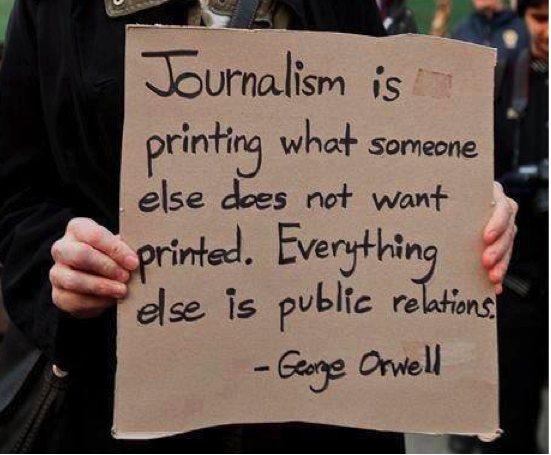
While American journalists have received death threats and are dismissed as “enemies of the people” by folks who refuse to face the facts, its actually much, much worse in Central Europe. This article captures some of my work on this subject, and gives an update about what is needed to support these whistle-blowers who are putting their lives on the line.

Here are the insider tricks to figure out if a news item is true or not. Please share this PSA which contains some basic media literacy guidelines so that you don’t get duped by those who want to use you to spread their lies.
https://www.youtube.com/watch?v=i3rDP_boUYw&feature=youtu.be

I’m happy to see this new initiative that helps us identify the real journalists who offer trusted work, with accountability. Now we need to get more media literacy, so consumers will know to use tools like this Transparency Tracker to select reality-based, fact-based journalism providers instead of falling prey to the propagandists, newsbots and conspiracy theorists who are making money or gaining power by duping us into spreading and believing stuff that isn’t true.
Most importantly, tools like this confirm that some content is much more trustworthy than other content You CAN figure out what is useful news from what is propaganda. Don’t be left powerless by cynicism that tells you everything is a scam. If you decide that, you will never be able to hold the bad guys to account.
Journalism has never been, and will never be, perfect. But it is a tragedy when people don’t understand who is working in the public interest, to help empower them with information, versus all those jerks who are trying to sell them something for their own amusement or ill-gotten gains.
“I am seeing this so you don’t have to!”
This 2012 rebuke from war correspondent Marie Colvin to her London editor, as she returned to die in the horrors of Syria, is the best description of journalism I ‘ve ever heard. “A Private War,” Matt Heineman’s morally fierce new film about Colvin, reminds us that some people give up everything, trying to give us the truth.
How terrible then, for so many Americans to live in a world of deliberate lies. It is inevitable that the Trump-Fox News bubble will burst, as our country faces the real impacts of climate change, Russian cyberwarfare, economic inequality and Republican corruption. I feel sorry for the genuine conservatives out there who have made this devil’s bargain with Trump. If history is any guide, the gains they have made will be threatened, if not reversed, by the coming wave of revulsion.
While Colvin’s retort was about war, it could apply also to the tedious journalism of court documents, transcripts, government fine print, and data of all kinds that reporters plow through to figure out what’s true. The public can see this evidence for themselves, if they want to do this investigation of documents in plain sight. But who wants to take the time? So thank goodness nonprofit and for-profit mainstream reporters all over the world, including The New York Times and Washington Post, Propublica, The New Yorker and the Atlantic—are doing this for us. Check out the Post’s summary Dec. 3 report about the Mueller investigations, based on actual court convictions and guilty pleas.
https://www.washingtonpost.com/politics/2018/12/03/president-trumps-misleading-statements-trump-tower-moscow-timeline/?utm_term=.92d49c89e44f
I won’t be going to see the film about Gary Hart, not because I think the press was always terrific in covering him, but because I think they did an honest job outing his hypocrisy and weirdness. Matt Bai, who wasn’t there at the time and has a gauzy view of how Hart might have served as president, has done a disservice to history. Hart was a hypocrite and a liar. He was no Donald Trump, to be sure. But looking back to say he would have been a great president, and setting it up to blame the media, is a waste of everyone’s time.
Instead see “A Private War,” where an imperfect—crazy and sometimes out of control—journalist does the job. That is the real story.
https://goo.gl/images/oZYKQv
https://www.vanityfair.com/news/politics/2012/08/marie-colvin-private-war